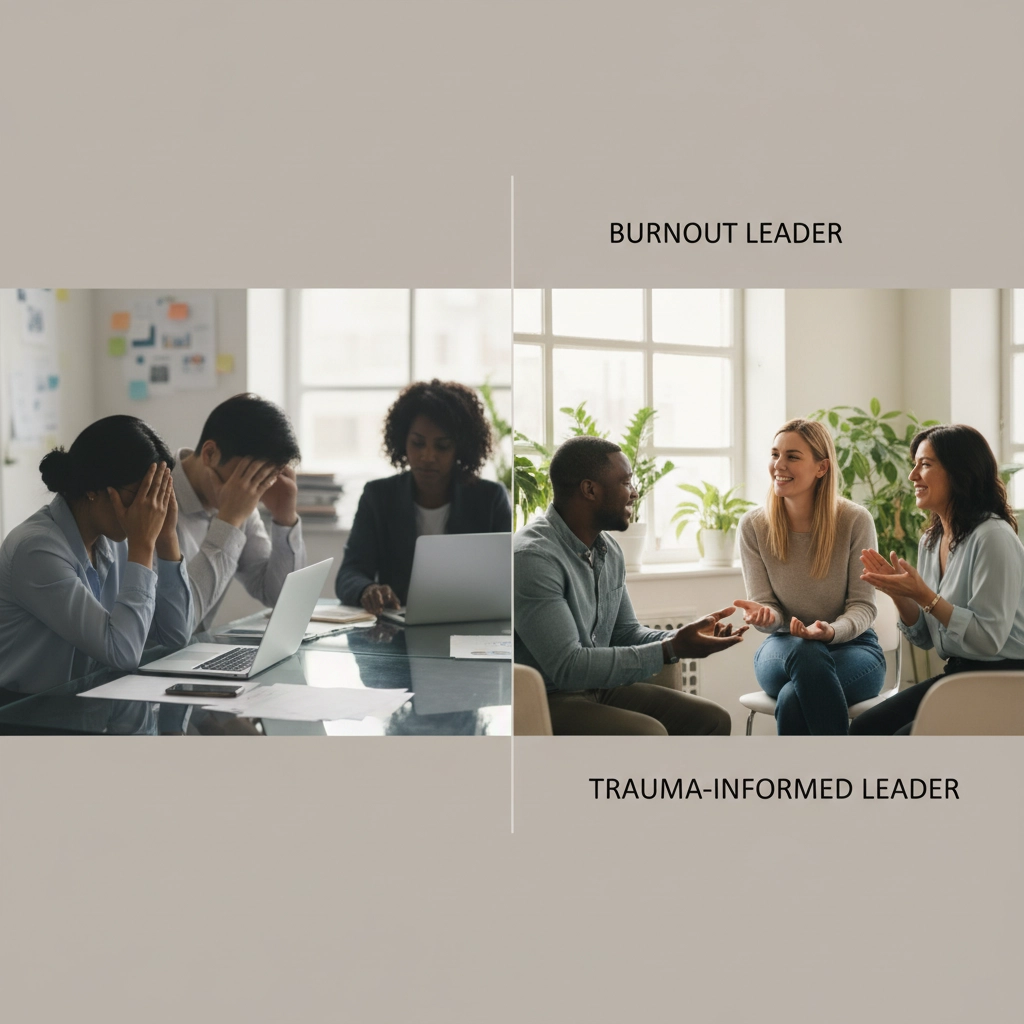
Burnout Leaders vs. Trauma-Informed Leaders: Which Are You?

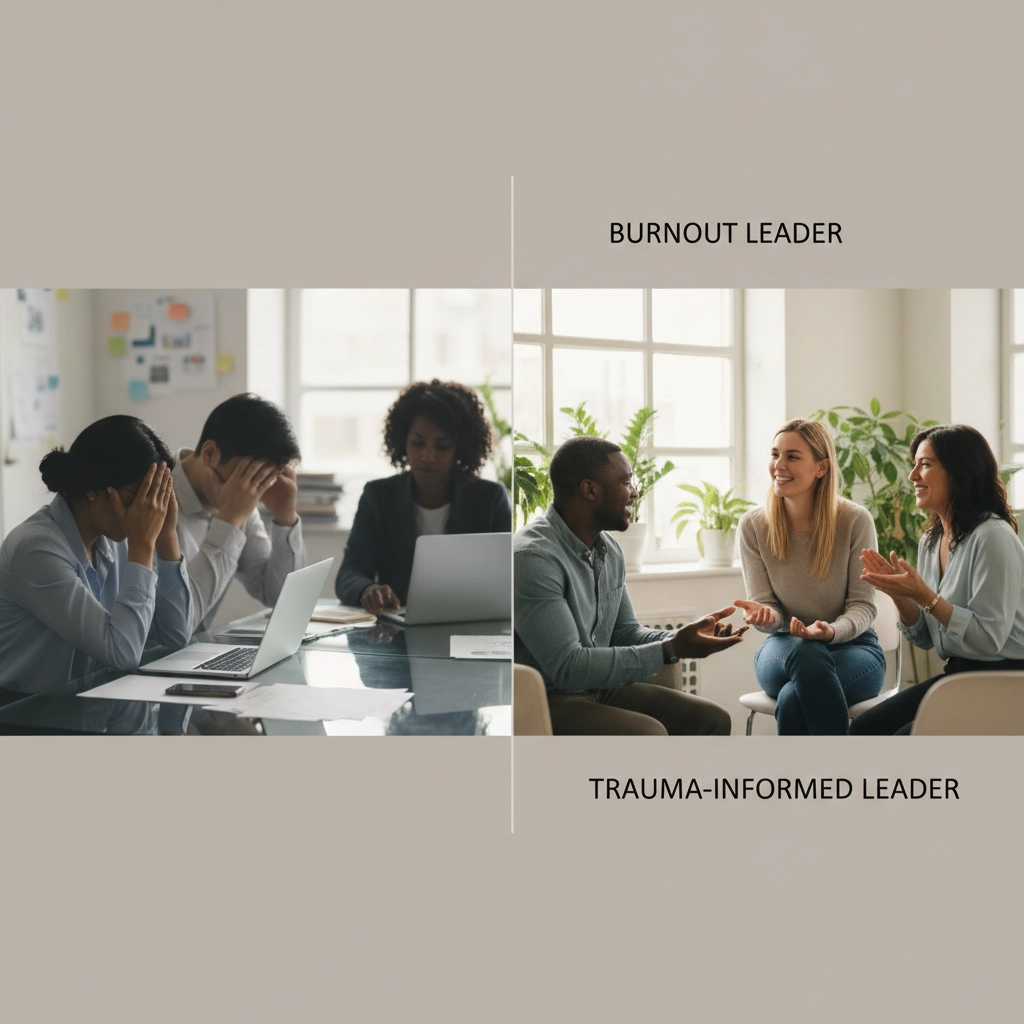
Leadership isn't just about getting results anymore. In today's workplace, how you achieve those results matters more than ever. The difference between a leader who burns out their team and one who builds resilient, thriving organizations often comes down to one fundamental shift: understanding trauma's role in the workplace.
So which type of leader are you? Let's break it down.
The Tale of Two Leadership Styles
Picture this: An employee shows up late three times in one week. How you respond reveals everything about your leadership approach.
The Burnout Leader immediately thinks: "What's wrong with you? This is unacceptable behavior." They might issue a write-up, deliver a stern warning, or start building a case for termination. Their focus is on control, productivity, and maintaining standards: no matter the cost to their people.
The Trauma-Informed Leader takes a different approach entirely. They think: "What happened to you? Is everything okay?" Instead of jumping to punishment, they create space for conversation and seek to understand what's behind the behavior.
This shift from "What's wrong with you?" to "What happened to you?" isn't just a nice sentiment: it's a complete paradigm change that transforms workplace culture from the ground up.

Understanding Burnout Leadership
Burnout leaders operate from what we call traditional leadership models. They prioritize productivity above all else, viewing employees as tools to accomplish organizational goals rather than whole human beings with complex lives and experiences.
Here's what burnout leadership looks like in practice:
- Control-focused: Everything flows from the top down with minimal input from team members
- Performance-obsessed: Numbers matter more than the people producing them
- Problem-punitive: When issues arise, the immediate response is disciplinary action
- Emotionally distant: Professional boundaries mean avoiding any discussion of personal struggles
- Crisis-reactive: Problems are addressed only after they become urgent
Without training in recognizing trauma responses, burnout leaders often misinterpret signs of distress. When employees seem disengaged, struggle with concentration, or have emotional reactions, these leaders see performance problems rather than human beings working through difficult experiences.
The result? Toxic work environments that drive away talent, increase absenteeism, and create legal risks around ADA violations and harassment complaints.
The Trauma-Informed Alternative
Trauma-informed leaders recognize a simple truth: trauma shows up everywhere, including our workplaces. Whether it's childhood experiences, systemic oppression, global pandemics, or personal loss, everyone carries something that affects how they show up to work.
These leaders operate from six core principles:
- Safety: Creating physical and psychological safety for all team members
- Trustworthiness & Transparency: Building relationships through consistent, honest communication
- Peer Support: Fostering mutual support among team members
- Collaboration & Mutuality: Sharing power and decision-making meaningfully
- Empowerment & Choice: Giving people agency in their work and development
- Cultural Awareness: Understanding how historical, gender, and cultural factors impact team dynamics
Trauma-informed leaders serve as what researchers call "servant leaders": they view their role as developing their people rather than using them to achieve goals.

Side-by-Side Comparison
| Aspect | Burnout Leaders | Trauma-Informed Leaders |
|---|---|---|
| Core Question | "What's wrong with you?" | "What happened to you?" |
| Employee View | Tools to be used | Resources to be developed |
| Response to Struggle | Punishment and discipline | Curiosity and support |
| Communication Style | Top-down directives | Collaborative conversations |
| Safety Focus | Physical safety only | Physical AND psychological safety |
| Self-Awareness | Limited vulnerability | Model self-compassion |
| Change Management | Impose solutions | Co-create responses |
Which Leader Are You? Take This Quick Assessment
You might be operating as a burnout leader if you:
- Respond to performance issues with immediate discipline
- Feel uncomfortable when employees share personal struggles
- Measure success purely through productivity metrics
- Avoid discussing mental health or wellbeing with your team
- Think emotional responses at work are "unprofessional"
- Rarely ask team members what they need to succeed
You're likely trauma-informed if you:
- Ask curious questions before jumping to conclusions
- Create regular check-ins focused on wellbeing, not just tasks
- Acknowledge your own struggles and model self-compassion
- Validate team members' emotions and experiences
- Actively work to make your workplace psychologically safe
- Recognize that everyone has a story that affects their work

The Real-World Impact
The organizational outcomes between these two approaches are dramatic.
Burnout leadership creates:
- High employee turnover (people leave managers, not companies)
- Increased absenteeism and sick days
- Low morale and disengagement
- Higher risk of legal issues and complaints
- Reputation damage from former employees
- Decreased innovation and creativity
Trauma-informed leadership generates:
- Resilient organizations that recover faster from crises
- Better diversity, equity, and inclusion outcomes
- Stronger leadership pipelines
- Improved employee satisfaction and retention
- Enhanced workplace and client satisfaction
- More cost-effective operations overall
Research consistently shows that trauma-informed care creates what experts call "healing milieus": work environments that actively support wellbeing and lead to optimal outcomes across multiple organizational objectives.
Making the Shift: Practical Steps
Transitioning from burnout to trauma-informed leadership isn't about becoming a therapist to your staff. It's about deliberately shifting your leadership paradigm to center healing and foster organizational resilience.
Start with these concrete changes:
Instead of: "You've been late three times this week."
Try: "I've noticed you've been arriving later than usual. Is everything okay, and how can we support you?"
Instead of: "You're being overly emotional about this."
Try: "Your feelings are valid. Let's explore what's coming up for you and how we can address it together."
Instead of: "This is just how we do things here."
Try: "What do you need to feel balanced and supported in your role right now?"
The highest-impact interventions happen at the organizational level, not individual level. This requires thoughtful planning and systems-wide change, but the results speak for themselves.
Your Leadership Legacy
Every interaction you have as a leader either contributes to someone's trauma or helps them heal from it. There's no neutral ground.
When you choose trauma-informed leadership, you're not just changing how you manage: you're creating what researchers call "posttraumatic growth" for both yourself and your teams. You're building organizations that don't just survive challenges but emerge stronger from them.
The question isn't whether trauma exists in your workplace. It does. The question is whether you'll be the kind of leader who recognizes it, responds with compassion, and creates conditions for everyone to thrive.
Which leader will you choose to be?
Ready to transform your leadership approach? Visit our website to explore trauma-informed coaching and team development programs designed to help leaders create healthier, more resilient workplace cultures.